The Phantom Menace: Does Mold Really Smell Like Cat Pee?
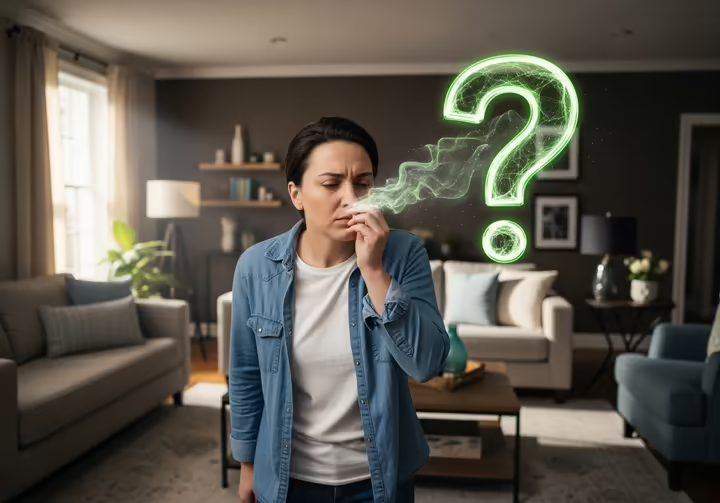
You smell it. That sharp, unmistakable whiff of cat pee. But wait... you don't own a cat. Are you going crazy? Nope. Your nose is a surprisingly good chemical detector, and it's picked up on a big, soggy problem.
The Science Behind the Stink
The spooky similarity between old cat urine and some mold isn't in your head, it's real chemistry. Both can produce the exact same pungent gas: ammonia. It’s the result of two very different processes that can, unfortunately, happen in your house.
First, Cat Pee 101
Fresh cat pee is actually pretty mild. The infamous, nose-stinging stench develops over time. Urine contains a compound called urea, and once it's out in the world, bacteria start to feast on it.
These bacteria release an enzyme that breaks urea down into two things, carbon dioxide and ammonia gas. That sharp, stinky smell? That's the ammonia. As it decomposes further, other compounds break down and release thiols, which are also found in skunk spray... yikes.
Cat urine is extra potent for two reasons. Cats evolved in the desert, so their kidneys make very concentrated urine with less water. And male cats have extra steroids and compounds in their pee to mark territory, making it even more aggressive as it decays.
And Now, For the Mold...
Mold is nature's demolition crew. Its job is to break down dead organic stuff, whether that's a log in a forest or the materials in your house, like the paper on drywall, wood studs, or carpet backing. As mold eats, it releases a mix of gases called microbial volatile organic compounds (mVOCs).
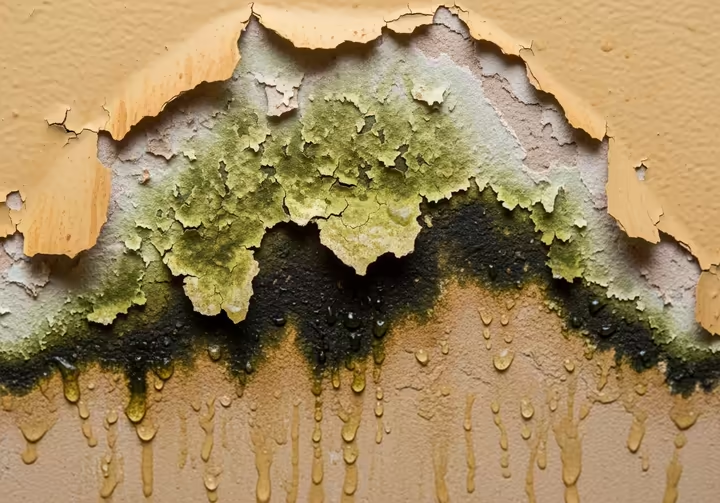
This gas cocktail is what creates that classic "musty" or "earthy" mold smell. But in damp, low-oxygen spots, like deep inside a wall, some fungi have a special trick. They break down nitrogen-containing stuff in their food (like amino acids in wood) and release ammonia gas as waste.
So that ammonia smell is a direct signal of an active fungus. Just like the smell of cat pee means bacteria are at work, the ammonia smell from mold means a fungus is actively eating part of your home.
Meet the Usual Suspects
So what kind of mold smells like cat urine? The most common culprits are from the Penicillium and Aspergillus genera. These guys are everywhere, indoors and out, and they're often the first to set up shop on damp building materials.
But here's the kicker, the specific smell depends more on the mold's environment and food source than its species. A single type of mold can make different smells depending on what it's eating. A Penicillium colony eating nitrogen-rich wallpaper glue might crank out ammonia, while the same species on a different surface just smells musty.
Detective Work: Cat Pee or Mold?
When you’re faced with a mysterious ammonia odor, you need to figure out the source. A hidden pet accident and a growing mold problem leave different clues. Paying attention to the smell's behavior, location, and friends will tell you who the culprit is.
Is the Smell Constant or Does It Come and Go?
A pet accident is an event . The odor is sharpest at first, then fades as it dries. But the uric acid can form crystals in carpets or wood that get " reactivated " by humidity, so the smell might pop up again on a damp day. It's often intermittent and stuck in one spot.
A mold smell, on the other hand, is a condition . The colony is always growing and making gas. This results in a smell that's persistent and pervasive. It's "always there," a permanent background scent that's constant, not event-driven.
Where is the Smell Coming From?
Think about the logic of the source. Cats usually pee in specific spots, favoring soft, absorbent surfaces. They'll target corners, carpets under furniture, laundry piles, and bedding. Your search should focus on these horizontal surfaces.
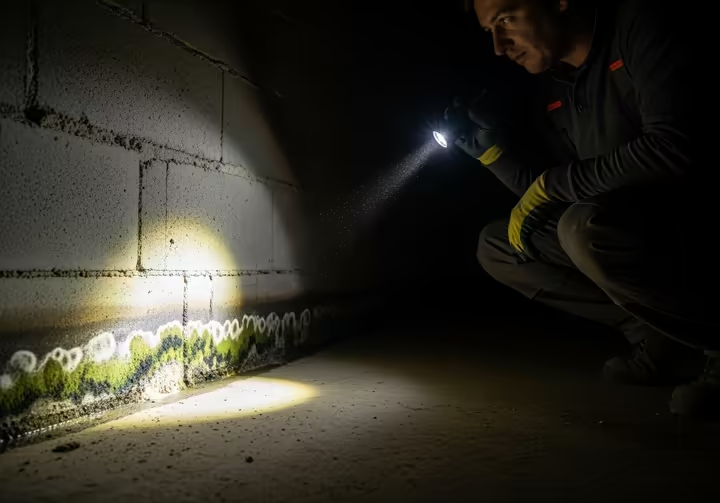
Mold's logic is all about moisture. It loves dark, damp, poorly ventilated spaces. A mold investigation should focus on basements, crawl spaces, under sinks, inside walls near plumbing, or around leaky windows. The smell will seem to come from a structure, like a wall or a floor, not a spot on the carpet.
What Else Do You Smell (and See)?
The ammonia smell from mold is rarely a solo performance. It's often joined by a background chorus of other musty, earthy smells, like damp soil or rotting wood. If the sharp ammonia smell is mixed with general mustiness, it’s a strong vote for mold.
The final confirmation is visual. A persistent ammonia smell should trigger a search for water stains on ceilings or walls, bubbling paint, warped floorboards, or... actual mold. It can be black, green, white, or orange, so any fuzzy or slimy growth in a damp area is suspect.
Okay, But Is It Dangerous?
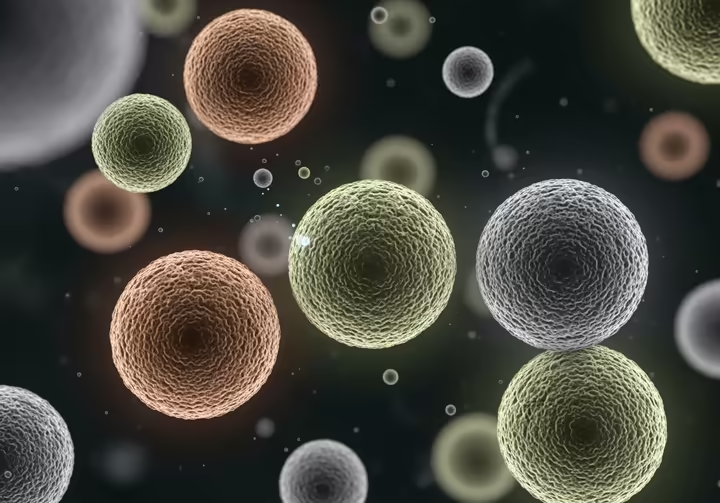
An ammonia smell from mold is a critical warning sign. The smell itself isn't the main issue, it's a symptom of an active mold colony. Inhaling the microscopic spores and chemicals released by this colony can lead to a range of health effects.
Allergies, Asthma, and Annoyance
The most common problems from indoor mold are allergic reactions. For people with mold allergies, inhaling spores can trigger hay fever symptoms, sneezing, a runny nose, coughing, and itchy, watery eyes. Skin rashes can also happen.
For people with asthma, mold is a serious trigger that can cause coughing, wheezing, and severe asthma attacks. Even in people without allergies, mold spores and their gases can irritate the eyes, skin, nose, throat, and lungs.
In rarer cases, heavy exposure can cause more severe conditions like hypersensitivity pneumonitis, a lung inflammation that feels like pneumonia. For people with very weak immune systems, inhaling certain mold spores can lead to life-threatening infections.
What About "Toxic Black Mold"?
Let's talk about the scary "toxic black mold." It's true that some molds, like Stachybotrys chartarum , can produce toxic compounds called mycotoxins. This greenish-black mold loves water-damaged drywall.
While eating food contaminated with mycotoxins is definitely dangerous, the science is still out on the health effects of inhaling the lower levels found in homes. The link to serious, systemic problems hasn't been conclusively proven and is still debated.
Because of this, health agencies like the CDC and EPA have a simple rule: don't bother trying to identify the mold. The color doesn't tell you if it's dangerous. If you see or smell mold, treat it as a potential health hazard and get rid of it.
Is the Ammonia Itself a Problem?
The ammonia gas from mold is a secondary issue. In high concentrations, ammonia is corrosive and dangerous. But the levels produced by mold in a home are very unlikely to reach those toxic concentrations.
While it's not a poisoning risk, the low-level presence of ammonia can add to the general irritation of your nose and throat. Think of it as a warning flare for the real hazard, the mold colony itself.
What If It's Not Mold?
While mold is the prime suspect, a good detective rules out other possibilities. A refrigerant leak from an AC unit or fridge can sometimes produce a sharp, chemical odor that some mistake for cat pee. This is usually accompanied by poor cooling performance or hissing sounds.
The source could also be outside. Certain plants, especially the English Boxwood shrub, can release a pungent, ammonia-like smell on warm days. If the smell is strongest near an open window, check your landscaping.
A few other things can cause a similar smell. Sewer gas seeping from a dried-out drain, a dead rodent in a wall (yuck), or even severely overheating electrical components can release sharp, acrid smells that might be confused with ammonia.
How to Get Rid of It
Once you’ve fingered mold as the likely culprit, it's time to take action. The goal is to get rid of the mold and fix the underlying conditions so it never comes back.
Step 1: Stop the Water
This is the most important rule of mold control. You cannot eliminate mold if you don't solve the moisture problem first. Cleaning the mold without fixing the leak is pointless, it will just grow right back.
Hunt down the source. Look for leaky pipes, roof leaks, or cracks in the foundation. Check for high humidity in bathrooms or basements and improve ventilation or use a dehumidifier. The water must be stopped before you can start cleaning.
Step 2: Clean-Up Time (DIY or Pro?)
According to the EPA, if the moldy patch is smaller than about 10 square feet (a 3-foot by 3-foot area), you can probably handle it yourself. If you do, wear protective gear, an N-95 respirator, goggles, and gloves. Scrub mold off hard surfaces with detergent and water, then dry the area completely.
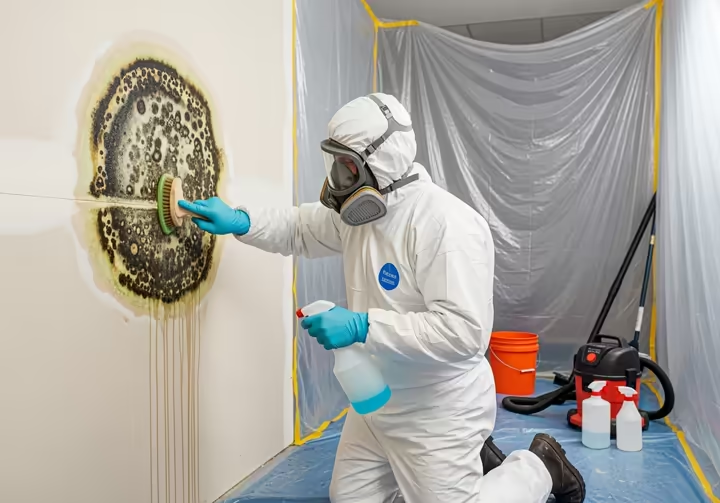
Porous materials like drywall, carpet, or insulation can't be cleaned. Once mold gets in, they have to be carefully cut out, bagged, and thrown away.
Call a professional remediator if the mold covers a large area, if it's in your HVAC system, or if it was caused by contaminated water like sewage. It's also safest to hire a pro if anyone in your home is highly vulnerable, like infants or those with compromised immune systems. Pros have the right equipment to contain the area, scrub the air, and make sure the job is done safely.
Trust Your Nose
That phantom cat pee smell isn't your imagination, it's a real chemical signal from your environment. It's the scent of ammonia, a byproduct of mold metabolizing and eating the structure of your house.
This smell is a critical warning. It points to moisture, which is an invitation for mold to grow. This compromises your home's integrity and can pose a range of health risks to you and your family.
By learning to read the signs, you can move from confused homeowner to empowered investigator. Stop the water, clean up the mess, and take action. Ultimately, your nose told you something was wrong... so listen to it.
Works cited
- 5 Tips For Preventing Your House From Smelling Like Cat Pee, https://tackletinkle.com/blogs/helpful-resources/5-tips-for-preventing-your-house-from-smelling-like-cat-pee
- My House Smells Like Cat Pee But I Can't Find It - ESS Company - EnviroSmart Solution, https://envirosmartsolution.com/blog/my-house-smells-like-cat-pee-but-i-cant-find-it/
- Why Does My Cat's Pee Smell So Bad? | ARM & HAMMER™, https://www.armandhammer.com/en/articles/cat-urine-smells-like-ammonia-strong-pee-smell
- 7 Reasons Why Your Cat's Pee Smells So Bad - Kinship, https://www.kinship.com/cat-health/why-cat-pee-smells-bad
- How to Remove Cat Urine from Clothes (Updated 2025) - ClothesLyne, https://www.clotheslyne.com/blog/remove-cat-urine-from-clothes-prevent-future-incidents/
- Making better scents of litter - Star Tribune, https://www.startribune.com/making-better-scents-of-litter/562830432
- The Remediation of Urine - Cleanfax, https://cleanfax.com/the-remediation-of-urine/
- Why does cat urine smell so bad and what can I do about it? - McGill University, https://www.mcgill.ca/oss/article/you-asked/why-does-cat-urine-smell-so-bad-and-what-can-i-do-about-it
- A Determination and Comparison of Urease Activity in Feces and Fresh Manure from Pig and Cattle in Relation to Ammonia Production and pH Changes - ResearchGate, https://www.researchgate.net/publication/268281883_A_Determination_and_Comparison_of_Urease_Activity_in_Feces_and_Fresh_Manure_from_Pig_and_Cattle_in_Relation_to_Ammonia_Production_and_pH_Changes
- www.armandhammer.com, https://www.armandhammer.com/en/articles/cat-urine-smells-like-ammonia-strong-pee-smell#:~:text=Bacteria%20begin%20to%20break%20down,has%20that%20noticeable%20skunky%20odor.
- Why Does Cat Pee and Urine Smell so Bad - Sarah's Pet Sitting, https://sarahspetsittingonline.com/why-cat-pee-smells-so-bad/
- Does Ammonia Kill Mold? - Rescue Clean 911, https://rescueclean911.com/blog/does-ammonia-kill-mold/
- Mold, https://www.chicora.org/mold.html
- What does mold smell like? | US EPA, https://www.epa.gov/mold/what-does-mold-smell
- Microbial Volatile Organic Compounds: An Alternative for Chemical Fertilizers in Sustainable Agriculture Development - PMC, https://pmc.ncbi.nlm.nih.gov/articles/PMC9861404/
- Extreme smells—microbial production of volatile organic compounds at the limits of life | FEMS Microbiology Reviews | Oxford Academic, https://academic.oup.com/femsre/article/doi/10.1093/femsre/fuaf004/7989455
- www.epa.gov, https://www.epa.gov/mold/mold-course-chapter-1#:~:text=These%20compounds%20are%20known%20as,building%20and%20should%20be%20investigated.
- Mold Course Chapter 1: | US EPA, https://www.epa.gov/mold/mold-course-chapter-1
- Fungal ammonia fermentation, a novel metabolic mechanism that ..., https://pubmed.ncbi.nlm.nih.gov/14722082/
- Ammonia Fermentation, a Novel Anoxic Metabolism of Nitrate by Fungi - ResearchGate, https://www.researchgate.net/publication/11642504_Ammonia_Fermentation_a_Novel_Anoxic_Metabolism_of_Nitrate_by_Fungi
- Dissimilatory nitrate reduction by Aspergillus terreus isolated from the seasonal oxygen minimum zone in the Arabian Sea - PubMed Central, https://pmc.ncbi.nlm.nih.gov/articles/PMC3928326/
- Ammonia Pulses and Metabolic Oscillations Guide Yeast Colony Development - PMC, https://pmc.ncbi.nlm.nih.gov/articles/PMC133602/
- Trends in Biological Ammonia Production - MDPI, https://www.mdpi.com/2673-6284/12/2/41
- Indoor Mold, Toxigenic Fungi, and Stachybotrys chartarum: Infectious Disease Perspective - PMC - PubMed Central, https://pmc.ncbi.nlm.nih.gov/articles/PMC145304/
- Importance of the ammonia assimilation by Penicillium purpurogenum in amino derivative Monascus pigment, PP-V, production, https://pmc.ncbi.nlm.nih.gov/articles/PMC3621813/
- Ammonia fungi - Wikipedia, https://en.wikipedia.org/wiki/Ammonia_fungi
- (PDF) Plant waste hydrolysis by extracellular enzymes of Aspergillus niger and Penicillium chrysogemum: Effect of ammonia pretreatment - ResearchGate, https://www.researchgate.net/publication/202034170_Plant_waste_hydrolysis_by_extracellular_enzymes_of_Aspergillus_niger_and_Penicillium_chrysogemum_Effect_of_ammonia_pretreatment
- How To Find Cat Pee Smells Around the House - Rover.com, https://www.rover.com/blog/find-cat-pee/
- How to Get Rid of Cat Urine Smell - 7 Easy Steps - Litter-Robot, https://www.litter-robot.com/blog/why-does-my-whole-house-smell-like-cat-urine/
- How to Get Rid of Cat Pee Smell in Your Home - PuroClean Emergency Recovery Services, https://www.puroclean.com/delran-nj-puroclean-emergency-recovery-services/blog/how-to-get-rid-of-cat-pee-smell-in-your-home/
- What Is That Awful Smell? | News and Events for Frontier Foundation & Crawl Space Repair, https://www.frontierbasementsystems.com/about-us/blogs/49881-what-is-that-awful-smell.html
- House Smells Like Cat Pee: Common Causes and Simple Solutions - WOpet, https://wopet.com/cats/house-smells-like-cat-pee/
- How Can I Check My House For Mold? | Green Home Solutions of Myrtle Beach, https://www.greenhomesolutions.com/myrtle-beach-sc/how-can-i-check-my-house-for-mold/
- 13 Signs of Mold in Your House and What to Do About It | Angi, https://www.angi.com/articles/signs-of-mold-in-house.htm
- Signs of Mold: How to Detect Mold Growth in Your Home - W.B. Arthur, https://wbarthur.com/news-tips-tricks/2023/07/signs-of-mold-how-to-detect-mold-growth-in-your-home/
- How to Identify Mold in Your Home or Workplace - Core Environmental Solutions, https://coreenviro.com/how-to-identify-mold-in-your-home-or-workplace/
- 10 Signs of Mold: How to Detect Mold in Your Home? - Spaulding Decon, https://www.spauldingdecon.com/blog/signs-of-mold
- A Brief Guide to Mold, Moisture and Your Home | US EPA, https://www.epa.gov/mold/brief-guide-mold-moisture-and-your-home
- Mold and Your Health - Illinois Department of Public Health, https://dph.illinois.gov/topics-services/environmental-health-protection/toxicology/indoor-air-quality-healthy-homes/mold-your-health.html
- You Can Control Mold - CDC, https://www.cdc.gov/mold/pdfs/you_can_control_mold.pdf
- Health Problems | Mold - CDC, https://www.cdc.gov/niosh/mold/health-problems/index.html
- Mold allergy - Symptoms & causes - Mayo Clinic, https://www.mayoclinic.org/diseases-conditions/mold-allergy/symptoms-causes/syc-20351519
- Mold: Symptoms of Exposure, Risks, and More - Healthline, https://www.healthline.com/health/mold-in-house
- Molds and Health for Public Health Professionals | US EPA, https://www.epa.gov/mold/molds-and-health-public-health-professionals
- Mold - CDC, https://www.cdc.gov/mold-health/about/index.html
- About Invasive Mold Infections | Fungal Diseases - CDC, https://www.cdc.gov/fungal/about/about-invasive-mold-infections.html
- Can mold cause health problems? | US EPA, https://www.epa.gov/mold/can-mold-cause-health-problems
- Mold Health Risks - RI.gov, https://health.ri.gov/healthy-homes/mold-health-risks
- Stachybotrys chartarum (atra) contamination of the indoor environment: Health implications - PMC - PubMed Central, https://pmc.ncbi.nlm.nih.gov/articles/PMC2828207/
- Stachybotrys chartarum: The Toxic Indoor Mold - American Phytopathological Society, https://www.apsnet.org/edcenter/apsnetfeatures/Pages/Stachybotrys.aspx
- Mycotoxins - World Health Organization (WHO), https://www.who.int/news-room/fact-sheets/detail/mycotoxins
- Black Mold Exposure: Symptoms, Risks & Treatment - Cleveland Clinic, https://my.clevelandclinic.org/health/diseases/24862-black-mold
- Facts About Stachybotrys chartarum | Mold - CDC, https://www.cdc.gov/mold-health/data-research/facts-stats/index.html
- Adverse human health effects associated with molds in the indoor environment - PubMed, https://pubmed.ncbi.nlm.nih.gov/12762072/
- The Facts About Ammonia - New York State Department of Health, https://www.health.ny.gov/environmental/emergency/chemical_terrorism/ammonia_tech.htm
- HEALTH EFFECTS - Toxicological Profile for Ammonia - NCBI Bookshelf, https://www.ncbi.nlm.nih.gov/books/NBK598714/
- Ammonia | Chemical Emergencies - CDC, https://www.cdc.gov/chemical-emergencies/chemical-fact-sheets/ammonia.html
- Ammonia - TN.gov, https://www.tn.gov/health/cedep/environmental/environmental-health-topics/eht/ammonia.html
- jabertsch.com, https://jabertsch.com/what-does-freon-smell-like/#:~:text=Freon%20is%20generally%20odorless%20in,polish%20remover%2C%20or%20even%20chloroform.
- What Does Freon Smell Like? Identifying Signs of a Refrigerant Leak, https://4neighborhood.com/what-does-freon-smell-like-when-it-leaks/
- What Does Freon Smell Like? Signs of a Refrigerant Leak - J.A. Bertsch Heating & Cooling, https://jabertsch.com/what-does-freon-smell-like/
- What Does Freon Smell Like? Signs to Fix a Refrigerant Leak - General Tools & Instruments, https://generaltools.com/blog/what-does-freon-smell-like/
- ucanr.edu, https://ucanr.edu/blog/under-solano-sun/article/stinky-plants#:~:text=Some%20boxwoods%2C%20mostly%20the%20English,or%20broken%20branches%20of%20lantana.
- What is this hedge-y thing that smells like cat pee? Portland, Or. : r/whatsthisplant - Reddit, https://www.reddit.com/r/whatsthisplant/comments/16teuku/what_is_this_hedgey_thing_that_smells_like_cat/
- 14 Stinky Plants - HGTV, https://www.hgtv.com/outdoors/flowers-and-plants/14-stinky-plants-pictures
- What's that Smell? Home Odors you Should Not Ignore - Realty Masters of Florida, https://www.pensacolarealtymasters.com/blog/whats-that-smell-home-odors-you-should-not-ignore
- What are the basic mold cleanup steps? | US EPA, https://www.epa.gov/mold/what-are-basic-mold-cleanup-steps
- What to Expect During the Mold Remediation Process - ServiceFirst Restoration, Inc., https://callservicefirst.com/what-to-expect-during-the-mold-remediation-process/
- EPA Mold Remediation Guidelines | SI Restoration In Baltimore / Washington DC explained, https://www.si-restoration.com/resources/mold-remediation/epa-mold-remediation-guidelines-si-restoration-baltimore-washington-dc
- Mold Cleanup in Your Home | US EPA, https://www.epa.gov/mold/mold-cleanup-your-home
- Homeowner's and Renter's Guide to Mold Cleanup After Disasters - Environmental Protection Agency (EPA), https://www.epa.gov/sites/default/files/2017-08/documents/mold._homeowners_and_renters_guide_to_cleanup_after_disasters.pdf
- modernize.com, https://modernize.com/homeowner-resources/restoration/diy-mold-cleanup-vs-hiring-pro
- DIY vs. Professional Mold Removal: Considering the Risks - Lightspeed Restoration, https://www.lightspeedrestoration.com/blog/diy-vs.-professional-mold-removal-considering-the-risks
- ~$60k for mold remediation. Trying to wrap my mind around what to do. Proposal linked. : r/homeowners - Reddit, https://www.reddit.com/r/homeowners/comments/14mg1s3/60k_for_mold_remediation_trying_to_wrap_my_mind/
- Mold Remediation and Cleanup A Step by Step Professional Mold Remediation Guide - HAZWOPER OSHA Training, https://hazwoper-osha.com/blog-post/mold-remediation-and-cleanup-step-by-step-guide
- 8 Steps to Successful Mold Remediation - Pur360, https://pur360solutions.com/8-steps-to-successful-mold-remediation/
- Mold Remediation Guidelines | WBDG - Whole Building Design Guide, https://www.wbdg.org/resources/mold-remediation-guidelines
- 10 Steps for Professional Mold Remediation Services | Zona Restoration, https://zonarestoration.com/10-steps-for-professional-mold-remediation-services/
- 6 Steps of Mold Removal and Remediation | Ungerman Construction, https://www.ungerman.net/blog/6-steps-of-mold-removal-and-remediation
- Mold Remediation: The Complete Guide - RestoreMasters, https://www.restoremastersllc.com/restoration/mold-remediation/