Causes and Solutions for a Foul-Smelling Dental Crown
A foul odor from a dental crown indicates an underlying problem, such as bacterial infection, decay, or a structural failure of the restoration. This article explains the scientific reasons for the smell, details the common causes like microleakage and gum disease, and outlines the necessary professional treatments to resolve the issue and prevent further complications.
Executive Summary
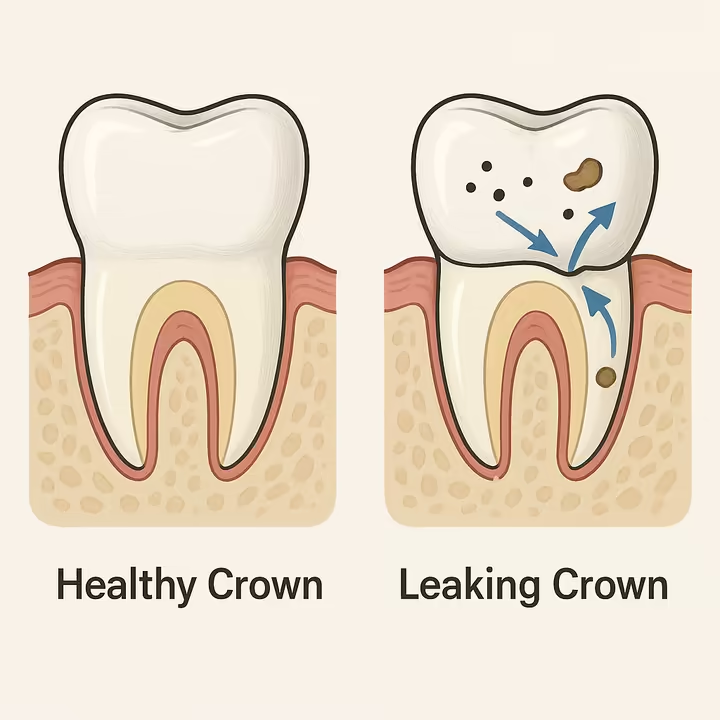
A foul, fecal-like odor from a dental crown indicates a pathological process and is never normal. The smell originates from the metabolic byproducts of bacteria in an oxygen-deprived space created by a failure in the crown-tooth system. The primary causes include microleakage at the crown margin, recurrent tooth decay under the crown, degradation of dental cement, or advanced gum disease.
While at-home hygiene can manage surface plaque, it cannot resolve the underlying structural or biological problem. A professional dental evaluation is essential for an accurate diagnosis and treatment to prevent complications like infection, abscess, or tooth loss. 1
The Scientific Source of a Foul Crown Odor
A shift in the oral cavity's bacterial ecosystem from health to disease can cause significant malodor. 4 When a dental crown fails to seal the tooth, it creates a small, oxygen-deprived space. This anaerobic niche allows specific Gram-negative bacteria, associated with periodontal disease and malodor, to multiply. 6
These bacteria, including species like Porphyromonas gingivalis , Fusobacterium nucleatum , and Prevotella intermedia , metabolize proteins from food debris, saliva, and gum fluid. This process releases volatile sulfur compounds (VSCs), primarily hydrogen sulfide (H2S), which smells like rotten eggs, and methyl mercaptan, which smells of rotting cabbage. 5

The specific fecal odor is caused by a different set of byproducts. These same anaerobic bacteria break down the amino acid tryptophan, producing compounds including indole and skatole (3-methylindole). 10 Skatole is the primary chemical compound responsible for the odor of mammalian feces. 11
Research shows a strong correlation between the presence of indole and skatole and measured malodor, and has identified P. gingivalis and F. nucleatum as major producers of these compounds. 10 A fecal smell from a crown is a specific biochemical signal of a pathogenic anaerobic infection, pointing to an oxygen-starved environment that requires immediate clinical investigation.
Primary Causes of Odor in Permanent Crowns
The anaerobic environment that produces foul odors results from a failure of the crown or surrounding tissues. These issues are often interconnected and worsen over time as part of an active disease process.
An initial small flaw, like a microscopic gap at the crown's edge, can allow oral fluids to enter, which dissolves the cement. This creates a larger void for recurrent decay to begin, while plaque at the faulty margin inflames the gum tissue, potentially starting periodontal disease.
A frequent cause of crown failure is microleakage, the microscopic passage of bacteria, fluids, and food particles through the interface between the crown and the tooth. 12 This occurs when the seal at the crown's margin, the critical junction where the restoration meets the natural tooth, is imperfect. This microscopic gap becomes a protected space for anaerobic bacteria.
Microleakage can result from errors in the fabrication or placement of the crown, or the degradation of the restoration over many years. 13 The consequence is a continuous seepage of nutrients that fuels bacterial colonization, leading to recurrent decay and a persistent, foul odor. 12
The natural tooth structure under a crown remains vulnerable to decay, a condition known as recurrent or secondary caries. 16 This new decay often begins at the crown margin and can progress underneath the restoration, frequently going undetected in its early stages. 15
As the decay expands, it creates a nutrient-rich, anaerobic cavity that is impossible to clean. If this decay reaches the tooth's pulp tissue, it can trigger a severe infection (pulpitis) or a dental abscess, which is a collection of pus that generates foul-smelling gases from necrotic tissue. 2
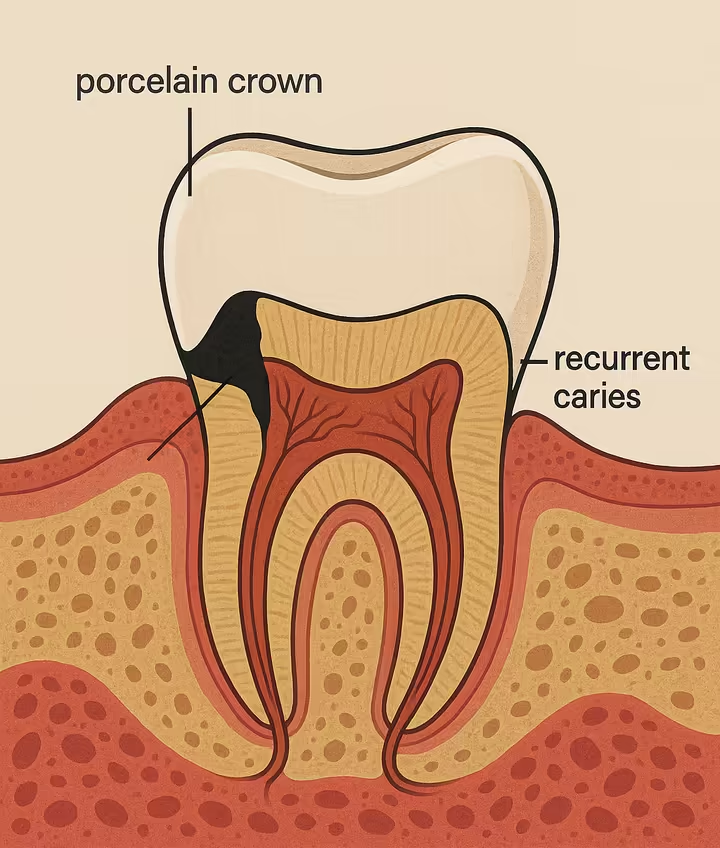
Dental cement is the agent that seals the microscopic space and bonds the crown to the tooth. 19 Over time, this cement can degrade or "wash out," particularly if exposed to saliva and bacteria through a leaky margin. 20
This process creates voids beneath the crown, which are rapidly colonized by odor-producing bacteria. 20 The natural flexion of the jawbone during chewing can place stress on restorations, accelerating the breakdown of the cement layer, a problem common in multi-unit dental bridges where forces are distributed across several teeth. 20
Periodontal disease, including gingivitis (gum inflammation) and periodontitis (destruction of the tooth's supporting bone), is another source of odors associated with dental crowns. Periodontitis is characterized by deep "periodontal pockets" between the tooth and the gums. 6
These pockets are anaerobic and are the primary habitat for VSC- and skatole-producing bacteria. 6 An ill-fitting crown with a bulky contour or a rough margin can trap plaque, irritating the gums and accelerating the progression of periodontal disease and malodor. 24
In some cases, the problem is a structural failure of the tooth underneath. A fracture in the tooth's root, often termed "cracked tooth syndrome," can create a deep pathway for bacteria to invade the tooth's internal structures and surrounding bone. 26
A vertical root fracture is a serious failure for a tooth. It leads to a localized, deep infection, chronic inflammation, and a foul odor, often accompanied by sharp pain upon biting and swelling or a draining abscess on the gum. 27
All these mechanisms can be worsened by patient-specific factors. Inadequate oral hygiene allows dental plaque to accumulate at the crown margins, providing the initial bacteria for subsequent failure. 16
Conditions such as xerostomia (dry mouth) also increase risk. Reduced saliva flow impairs the mouth's natural cleansing and acid-buffering ability, creating a more favorable environment for pathogenic bacteria to cause decay and malodor. 9
| Potential Cause | Primary Mechanism of Failure | Commonly Associated Symptoms & Context | Typical Onset / Timing |
|---|---|---|---|
| Microleakage / Open Margin | Imperfect seal at the crown-tooth interface allows bacterial ingress and fluid seepage. 12 | Odor, often most noticeable when flossing, is frequently the first and only sign. May be associated with a dark line at the gumline or mild sensitivity to sweets. 13 | Can occur soon after placement due to fabrication error, or develop gradually over years from wear. 14 |
| Recurrent Decay | Active carious lesion forming under the crown, creating an infected, nutrient-rich cavity. 18 | Odor plus potential sensitivity to sweets, cold, or pressure. Pain develops as decay approaches the tooth's nerve. 17 | Typically develops months to years after placement, often initiated by chronic microleakage. 15 |
| Periodontal Pocket | Gum disease (periodontitis) creates a deep, anaerobic pocket alongside the crown and root, which harbors pathogenic bacteria. 6 | Odor plus bleeding gums during brushing/flossing, gum recession, and possibly a persistent bad taste. The tooth may feel slightly loose in advanced stages. 24 | Can be a pre-existing condition or develop over time due to chronic plaque accumulation at an ill-fitting crown margin. 25 |
| Cracked Tooth / Root | A fracture line in the tooth structure allows bacteria to invade deep into the tooth and surrounding bone, causing a profound infection. 26 | Odor plus a sharp, localized pain upon biting and releasing pressure. May be accompanied by gum swelling or a draining abscess (fistula) near the root. 27 | Can occur suddenly from trauma or develop over time from chronic heavy biting forces (bruxism). 28 |
The Special Case of Temporary Crowns
An odor from a temporary crown is common and generally less cause for alarm than one from a permanent restoration. Temporary crowns are made from acrylic or composite resins, which are more porous and less durable than permanent materials. 33 The cements used are also intentionally weak and soluble to allow for easy removal. 34
Finally, the marginal fit of a temporary crown is less precise by design. This combination of a porous material, weak cement, and an imperfect seal creates an environment for leakage, food impaction, and bacterial colonization, often resulting in a noticeable odor. 38 While this is a known side effect of the provisional treatment phase, it should still be managed with diligent hygiene.
Red-Flag Symptoms: When to See a Dentist Immediately
While any foul odor from a permanent crown requires a dental visit, certain symptoms signal an acute problem needing immediate attention. An odor noticeable only when flossing may indicate a minor marginal leak or localized gingivitis. 31 However, "red-flag" symptoms suggest a more advanced infection or structural failure.
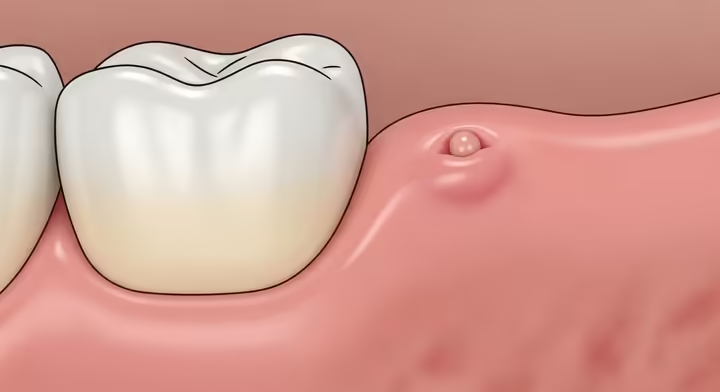
These signs include spontaneous, throbbing pain (often indicating an abscess); a sharp, localized pain when biting (a classic sign of a cracked tooth); visible swelling of the gum tissue; a small, pimple-like lesion on the gum (fistula) draining pus from a deep infection; a loose or mobile crown; or systemic signs of infection like fever or swollen lymph nodes. 16 The presence of an odor with any of these symptoms points to an active infection or significant structural compromise that a dentist should evaluate without delay.
Solutions: From Home Care to Professional Treatment
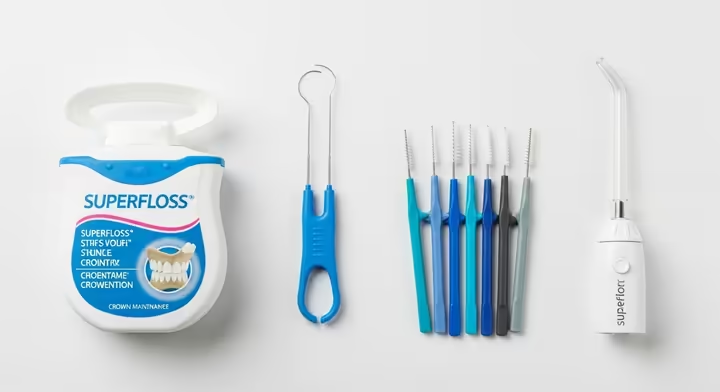
Addressing a foul-smelling crown requires professional treatment, as at-home care has limitations. While awaiting a dental appointment, a patient can manage the odor temporarily. This includes careful brushing with a soft-bristled brush at the gumline and using tools like interdental brushes or Superfloss to clean accessible gaps. 29
A water flosser can help flush debris and bacteria from the crown margin and shallow pockets. 29 An alcohol-free, antibacterial mouthwash can also temporarily reduce the bacterial load and mask the odor. 29
However, these are temporary measures. They clean the exterior but cannot access the bacterial reservoir under a leaking crown or within a deep periodontal pocket, nor can they repair the underlying structural failure. 1
The only definitive solution is professional dental intervention. A dentist will perform a clinical examination, assessing the crown's margins, checking gum health, and testing the tooth's sensitivity. A dental radiograph (X-ray) is essential to visualize the area beneath the crown and detect marginal gaps, decay, bone loss, or root fractures. 1
Based on the diagnosis, treatment is tailored to the cause. If the issue is plaque at a sound margin, a professional cleaning and hygiene instruction may be sufficient. More commonly, treatment involves removing the old crown, excavating any decay, and fabricating a new, better-fitting crown. 2
If the pulp is infected, root canal therapy is required before a new crown is placed. 40 If the cause is periodontal disease, treatment will focus on deep cleaning procedures like scaling and root planing. 6 In severe cases, such as a non-restorable tooth fracture, extraction may be the only option. 26
Prevention and Long-Term Crown Maintenance
The most effective strategy for preventing odor is to maintain the health of the structures supporting the crown. While the crown material itself, be it porcelain, zirconia, or gold, cannot decay, the natural tooth at its margin and the surrounding gums remain vulnerable. 42 Therefore, meticulous and consistent oral hygiene is required for the long-term success of any crown. 3
The most critical area to clean is the margin, where the crown meets the tooth and gumline, as this is where plaque first accumulates. 42 Best practices include brushing at least twice daily with a soft-bristled toothbrush and fluoride toothpaste, angling the bristles toward the gumline. 29 Daily flossing is essential.
For crowns that are part of a bridge or have tight contacts, tools such as floss threaders, Superfloss, or interdental brushes are often necessary to clean the margins properly. 1 The use of a water flosser is also recommended to flush debris from around crown margins. 29
This home care must be supplemented with regular professional care. Routine dental check-ups and cleanings allow a dentist to monitor the crown’s integrity, clean the margins, and take periodic radiographs to detect hidden decay or bone loss before they cause symptoms. 3
Frequently Asked Questions (FAQ)
Why does my crown smell like poop?
The smell is caused by specific anaerobic bacteria trapped in an oxygen-deprived space under or around your crown. These bacteria release waste products, including a compound called skatole, which is the same chemical that gives feces its characteristic odor.10 This indicates an active infection or decay that requires professional dental attention.
Is it normal for a temporary crown to smell when it's removed?
It is common for temporary crowns to develop an odor due to their porous material and the weak cement used for placement.37 While this should be managed with good hygiene, it is not as alarming as an odor from a permanent crown. The smell comes from bacteria and food particles that have seeped under the temporary seal.
My crown smells bad but there's no pain, should I worry?
Yes, you should see a dentist. Pain is often a late-stage symptom, and its absence does not mean a problem does not exist.17 The odor itself is a definitive sign of a bacterial issue, such as a leaking margin, early decay, or a chronic gum infection, which will worsen if left untreated.31
How can I get rid of the bad smell from my crown?
The only way to permanently eliminate the smell is to have a dentist diagnose and treat the underlying cause.1 While diligent brushing, flossing, and using a water flosser can provide temporary relief by cleaning the exterior, they cannot fix a structural problem like a leak or decay.29 Professional treatment is essential to eliminate the source of the infection.
What does an infection under a crown smell like?
An infection under a crown often produces a potent, foul odor that can be described as smelling like rotten eggs, sewer gas, or feces.45 This is due to the mix of volatile sulfur compounds from protein breakdown and other bacterial byproducts like indole and skatole from tryptophan breakdown.9 The smell is a clear indicator of a decaying, infectious process.
Can a dental crown cause bad breath?
A properly fitted and maintained crown will not cause bad breath. However, a faulty crown, one that is leaking, loose, or has decay underneath, creates a protected breeding ground for odor-causing bacteria.22 Therefore, the crown's failure to properly seal and protect the tooth is a direct cause of persistent, localized bad breath.
Key Takeaways
A foul or fecal-like odor from a dental crown is a diagnostic sign that should not be ignored. It is a direct biochemical confirmation of anaerobic bacterial activity within a protected space, resulting from a failure in the crown-tooth-gum complex. The underlying causes range from microleakage and cement degradation to recurrent decay and periodontal disease.
While diligent at-home hygiene is essential for prevention and maintenance, it cannot cure a problem rooted in a structural or biological defect. A professional dental evaluation, including a clinical examination and radiographs, is necessary for an accurate diagnosis and is the only path to a successful resolution.
Works cited
- 3 Reasons for Bad Smell Coming From Crowns and Bridges - ToothAid School, https://toothaidschool.com/article/bad-smell-from-crown-and-bridge/
- Why Does My Dental Crown Smell?, https://bridgecreekdental.com/why-does-my-dental-crown-smell/
- Dental Crowns: Types, Procedure & Care - Cleveland Clinic, https://my.clevelandclinic.org/health/treatments/10923-dental-crowns
- Dental plaque - Wikipedia, https://en.wikipedia.org/wiki/Dental_plaque
- oral malodor caused: Topics by Science.gov, https://www.science.gov/topicpages/o/oral+malodor+caused
- Healthier Gums - Dr. Clyde Schultz, DDS, https://www.clydeschultzdds.com/services/healthier-gums/
- Where Is The Swelling Really Coming From – A Case Study – The Causes | Seymour Dental, https://www.seymourdental.com.au/2023/06/19/where-is-the-swelling-really-coming-from-a-case-study-the-causes/
- Oral malodour (halitosis) - PMC, https://pmc.ncbi.nlm.nih.gov/articles/PMC1570844/
- Halitosis or bad breath - Better Health Channel, https://www.betterhealth.vic.gov.au/health/conditionsandtreatments/halitosis-or-bad-breath
- Bacteria Responsible for Production of the Indole/Skatole ..., https://iadr.abstractarchives.com/abstract/2003Goteborg-32959/bacteria-responsible-for-production-of-the-indoleskatole-component-of-bad-breath
- Skatole - Wikipedia, https://en.wikipedia.org/wiki/Skatole
- Microleakage: Detecting and Preventing | Dentsply Sirona MENA, https://www.dentsplysirona.com/en-ae/discover/discover-by-topic/by-category/restorative/microleakage.html
- Microleakage: Detecting and Preventing | Dentsply Sirona USA, https://www.dentsplysirona.com/en-us/discover/discover-by-topic/by-category/restorative/microleakage.html
- Microleakage Among Different Dental Restorative Materials: Causes, Detection, and Impact on Marginal Integrity - Journal of Healthcare Sciences, https://www.johs.com.sa/pages/issue/abstract/?id=208
- Recurrent Caries Causes, Treatments, and Prevention | Dentsply Sirona USA, https://www.dentsplysirona.com/en-us/discover/discover-by-topic/by-category/restorative/recurrent-caries-causes.html
- What Happens If Bacteria Get Under a Dental Crown?, https://www.smiledentalcenterct.com/blog/restorative-dentistry/bacteria-under-crown/
- Why Does Decay Recur Under Fillings and Crowns? - Toothopia Dental, https://toothopiadental.com/decay-recur-under-fillings-and-crowns/
- 7 Riveting Insights on Recurrent Caries and Tooth Decay - AZ Dentist, https://azdentist.com/conditions/recurrent-caries/
- What's a Luting Agent? Types of Dental Cements to Secure Your Restoration - Colgate, https://www.colgate.com/en-us/oral-health/bridges-and-crowns/whats-a-luting-agent-types-of-dental-cements-to-secure-your-restoration
- Watch Out! Washout! - Bite Point - TypePad, https://rickwilsondmd.typepad.com/rick_wilson_dmds_blog/2010/01/watch-out-washout.html
- Dental Cements | Pocket Dentistry, https://pocketdentistry.com/dental-cements-4/
- Can Crowns Cause Bad Breath? - AZ Dentist, https://azdentist.com/can-crowns-cause-bad-breath/
- Can I get a dental crown if I have gum disease?, https://westcliffdental.co.uk/can-i-get-a-dental-crown-if-have-gum-disease/
- Can You Have Crowns with Gum Disease? - Precision Dentistry, https://precisiondentistry.ca/blog/can-you-have-crowns-with-gum-disease/
- The Vital Link Between Dental Crowns and Gum Health: Preserving Your Smile, https://narrewarrendentalcare.com.au/the-vital-link-between-dental-crowns-and-gum-health-preserving-your-smile/
- What Do You Do If Your Tooth Is Cracked Under Crown?, https://www.arrowhead-dental.com/what-do-you-do-if-your-tooth-is-cracked-under-crown/
- www.drjamrozek.com, https://www.drjamrozek.com/what-do-i-do-if-my-tooth-is-cracked-underneath-my-crown/#:~:text=Signs%20Your%20Tooth%20May%20Be%20Cracked%20Underneath%20Your%20Crown&text=You%20may%20experience%20sharp%20pain,tooth%20is%20beginning%20to%20swell.
- Broken Dental Crown in Gilbert, AZ? Get Relief Today!, https://www.riggsfamilydental.com/things-to-know-about-a-broken-dental-crown/
- Get Rid of Bad Smell from Crown | R+R Dental, https://www.randrdental.com/blog/how-do-i-stop-my-crown-from-smelling/
- Types of Bad Breath Smells: Causes, Treatment, Prevention, https://www.healthline.com/health/types-of-bad-breath-smells
- My crown filling smells horrible. : r/Dentistry - Reddit, https://www.reddit.com/r/Dentistry/comments/re0y9/my_crown_filling_smells_horrible/
- Gum Disease and Dental Crowns: Partners in Oral Health and Restoration, https://prospectroaddentalsurgery.com.au/blog/gum-disease-and-dental-crowns-partners-in-oral-health-and-restoration/
- Dental Glass Ionomer Cements as Permanent Filling Materials? —Properties, Limitations Future Trends - PMC - PubMed Central, https://pmc.ncbi.nlm.nih.gov/articles/PMC5510173/
- A Guide for Choosing the Right Dental Cements for Dental Professionals - Dentonics.com, https://www.dentonics.com/post/a-guide-for-choosing-the-right-dental-cements-for-dental-professionals
- The Comparison of Temporary Crown Retention Among Three Temporary Cements | Khon Kaen University Dental Journal - ThaiJo, https://he01.tci-thaijo.org/index.php/KDJ/article/view
- Effect of Temporary Cement, Surface Pretreatment and Tooth Area ..., https://www.mdpi.com/2304-6767/11/1/19
- Effect of temporary cement on the color of temporary crowns made ..., https://www.scielo.sa.cr/scielo.php?script=sci_arttext&pid=S2215-34112024000200062
- Should I be concerned about a smell coming from the recently ..., https://www.realself.com/question/summerville-sc-smell-coming-temporary-crown-dental-implant
- Bad breath - Diagnosis and treatment - Mayo Clinic, https://www.mayoclinic.org/diseases-conditions/bad-breath/diagnosis-treatment/drc-20350925
- Best Suitable Treatment for a Bad Smell Around a Crown - Dr. Anthony Mobasser, https://celebritydentist.com/bad-smell-around-crown-best-suitable-treatment-option/
- Dental Implants and Crowns for Patients with Periodontal Disease - Blevins Dentistry, https://www.blevinsdentistry.com/dental-implants-crowns-for-patients-with-periodontal-disease/
- Caring for Dental Crowns | Farmington, NM, Best Cosmetic Dentists Near You, https://www.deserthillsdental.com/services/cosmetic-dentistry/dental-crowns/care/
- Proper Crown Maintenance Can Prevent Bad Breath - St. George Dental Care, https://stgeorgedentalcare.com/preventing-bad-breath/
- 9 Essential Tips for Caring for Your Dental Crowns | Bryn Mawr, PA, https://www.brynmawrdentist.com/how-to-care-for-dental-crowns-bryn-mawr-pa/
- Bad Breath After Brushing Teeth: Tips & Tricks!, https://www.thedentallounges.com/types-of-bad-breath-smells/